Showing posts with label Acrylic painting tips. Show all posts

Saturday, July 26, 2025

How I Go From a Sketched Idea to a Fully Realized Painting


A quick pencil sketch from my sketchbook, that became my in-progress "Butterflies in the Sky" painting below.

Still a work in progress..."Butterflies in the Sky," acrylic on panel, 24" x 24". 

The sketch at the top of the page here took me all of about 30 seconds, with a few notes added in the seconds afterward. I generally keep my sketchbook near me, whether I'm doing household chores, preparing meals or painting. My ideas appear as out-of-the-blue epiphanies, as a flash, and I get them down as quickly as possible, then move on with my day. 

When it comes time to decide what I'll be working on next, I flip through my sketchbook, and consider which of my sketches are worthy of being developed. Then it becomes a more refined color sketch, and after that, for my Cookie Landscape paintings, I bake and decorate the scene, photograph it, and proceed to the many hours -- often hundreds of hours -- of the painting process. 

I'm really loving working on these Cookie Landscapes. They enable me to be endlessly creative, and hone my technical skills as well. From across the room, they really look quite magical, quite dimensional (despite being totally flat), and that challenge of being able to create a painting that isn't just fun and beautiful, but one that can also trick people into thinking that there is some sort of dimension or texture, it really excites me as an artist. 

If you like these works and want to see more, I post my daily progress frequently to TikTok and to my Instagram stories. If you want to see full process videos, I post those, too, when the pieces are done. You can check out my latest one, showing the process of designing, baking, decorating, then painting "Here Comes the Sun" on my Instagram

Thanks so much for visiting! 

Wednesday, July 23, 2025

Want to see how I make my Cookie Landscape Paintings?

Hey folks, if you are interested in following the daily progress of my Cookie Landscape painting series, which I'll be debuting at my March 2026 solo show at Hidell Brooks Gallery in Charlotte, North Carolina, make sure you check in on my TikTok or my Instagram stories to see the latest (remember that the Instagram stories are only up for 24 hours, so to see all of the clips, check my TikTok). 

Check out the latest video, where I show you some insights about the complicated planning stages for the cookie/frosting paintings. In case you are curious, there's no AI of any kind here! Just my brain and a bit of imagination creating a good old-fashioned sketch and color sketch, followed by me baking and decorating a real cookie/frosting scene, then spending many many hours painting it. 

Like this one, still in progress: Butterflies in the Sky, 24" x 24", acrylic on panel.

Check out my latest behind-the-scenes video if you want to see the crazy process I have for making the models for my Cookie Landscape paintings. This one, Butterflies in the Sky, is still a work in progress!

I hope these paintings bring a little bit of joy into your life! Thanks as always for your interest!

Friday, October 11, 2024

Video Clips of the Process of Painting a Giant Hot Fudge Ice Cream Sundae


Happy Friday! I thought I'd share some video clips of the Giant Hot Fudge Ice Cream Sundae I painted in 2023 for my solo show at Hidell Brooks Gallery in Charlotte, North Carolina. This was a tricky one, both because of the soft whipped cream and the texture of the glass. I also sometimes change details that may be present in my reference photo, but that I think just won't look right in a painting. I did that here, actually, part-way through the painting. Working big is always a challenge, too, in part because I often have to make up the details to make things look convincing. 

This piece is sold, but I'm working on a couple of new big ones that should be shipping to HB soon. To see what other works I may have available, visit the HB website here.

Thanks for watching!

Hot Fudge Sundae, 50" x 40", acrylic on panel. SOLD.


Friday, October 4, 2024

Painting a Giant Strawberry Ice Cream Sundae in Acrylic


Happy Friday! Here's a short video showcasing clips of me painting the Strawberry Ice Cream Sundae for my 2023 solo show at Hidell Brooks Gallery in Charlotte, North Carolina. Acrylic on panel, 48" x 36", SOLD. 

I really loved all of the abstract shapes in this one, particularly when it comes to painting the ice cream behind the glass container. You'll also notice that I paint this one upside down at one point. I do this for a lot of my paintings because it helps me to see the shapes and colors more objectively, rather than trying to make them look like something. There's a great book that taught me this little trick years ago, although it was intended to be used for drawing, Drawing on the Right Side of the Brain by Betty Edwards. I still find this book to be incredibly helpful even today, as it keeps my paintings more accurate and has taught me to see things differently as I work. 

Thanks for visiting!

Strawberry Sundae, acrylic on panel, 48" x 36", 2023. SOLD.


Monday, September 30, 2024

Short Realistic Painting Video Demo of a Small Vanilla Rainbow Sprinkles Ice Cream Cone


Happy Monday! Here are short video clips of the process I used when painting the small vanilla cone with sprinkles, acrylic on panel, 16" x 12", completed earlier this year. Loved the drip on this one! Plus, it's actually a really great painting challenge to paint "white" ice cream on a white background. 

Sold through Hidell Brooks Gallery in Charlotte, North Carolina. Thanks for watching!

Small vanilla ice cream cone with rainbow sprinkles by artist Kim Testone
Small Vanilla with Sprinkles, acrylic on panel, 16" x 12". Sold.


Tuesday, September 24, 2024

Step by Step Short Acrylic Painting Demo Video of the Cotton Candy Swirl Ice Cream Cone


Happy Tuesday! Here's a short painting demo video showing some of the steps I used to paint a 16" x 12" Cotton Candy Swirl Ice Cream Cone, acrylic on panel. When taking reference photos for this one, I happened upon this one lucky scoop that included that lovely bullseye swirl. Since I was quite sure I'd never be able to scoop something like this again, I had to paint it! 

The original piece has been sold through Hidell Brooks Gallery in Charlotte, North Carolina. You can click here to see what other original paintings I may have available. Thanks for looking!


Cotton Candy Swirl, acrylic on panel, 16" x 12", by Kim Testone. Sold.


Wednesday, September 18, 2024

Step by Step Video Demo Painting a Strawberry Raspberry Vanilla Triple Scoop Ice Cream Cone in Acrylic


Happy Wednesday! I thought I'd share another short video demonstration, this time painting this Raspberry Swirl, Vanilla, Strawberry Triple Scoop cone. As with all my pieces, I used my own reference photo, after having sculpted numerous ice cream combinations with my bare hands and some kitchen tools. The drip of the vanilla down through the strawberry and onto the cone give this piece a little personality and feel for how it was starting to melt. This piece took about 50 to 60 hours to complete.

The original 24" x 12" acrylic on panel painting has been sold. You can see what other works I may have available at Hidell Brooks Gallery here

Thanks for watching!

Summer Triple Scoop, acrylic on panel, 24" x 12". SOLD.


Saturday, September 14, 2024

Video Clips of Working on Large Ice Cream Paintings


Happy Saturday! Since I'm working on some large pieces right now (minimum four feet tall), I thought I'd share a little compilation of some clips of me working on previous large projects, plus I have one current one thrown in there. Working on the large ice cream paintings is always a different type of challenge than the small ones. I have to essentially make up a lot of the details, so they can take on a more convincing presence, thus I think of these as more hyperrealistic. But I think the big paintings better serve the goal of trying to make the viewer feel as happy as a little kid, looking up at a giant ice cream cone or sundae. 

Anyway, hope you enjoy! Thanks for stopping by!

Saturday, September 7, 2024

Short Step by Step Acrylic Painting Video Demo of the Strawberry Crunch Ice Cream Bar


Hope everyone is having a good weekend! I just thought I'd share the video I've just posted to my new YouTube channel of the steps I used in painting this year's Strawberry Crunch Bar, acrylic on panel, 24" x 18", available at Hidell Brooks Gallery in Charlotte, North Carolina.

This was a super-complicated piece, and there isn't really any way to make it easier to paint. Just piece by piece by piece. I actually started on this piece in May 2023, then abandoned it for a full year, thinking I'd taken too much on. But I decided to persevere, and here it is! I hope you enjoy watching! Thanks for stopping by!

Strawberry Crunch Ice Cream Bar realistic acrylic painting by artist Kim Testone
Strawberry Crunch Bar, acrylic on panel, 24" x 18". Available at Hidell Brooks Gallery.


Saturday, August 31, 2024

Short Step by Step Acrylic Painting Video Demo of a Chocolate Vanilla Fudge Ripple Ice Cream Cone


Here's are some video clips of me recently painting this 24" x 12" Chocolate Vanilla Fudge Ripple Triple Scoop Ice Cream Cone, acrylic on panel. I loved working on this one, though it did require a lot of extra time, particularly the details in the ripples of fudge. In all, it took about 50 to 60 hours to complete. Thanks for looking!


Chocolate Vanilla Fudge Ripple Triple Scoop, acrylic on panel, 24" x 12", by Kim Testone.


Wednesday, August 21, 2024

Short Step by Step Acrylic Painting Video Demo of the Orange & Yellow Sherbet Ice Cream Cone


Here are some short clips of me painting the Orange & Yellow Sherbet Cone, acrylic on panel, 16" x 12", showing the progression from beginning to end. My paintings always consist of layers over layers, clarifying the shapes and colors as I go. I hope you enjoy! Thanks for watching! 

Tuesday, August 20, 2024

Happy Inspiration for the Orange & Yellow Sherbet Painting


Orange and Yellow Sherbet realistic ice cream cone painting by Kim Testone
Orange & Yellow Sherbet Cone, acrylic on panel, 16" x 12".

I thought I'd share a quick post this morning, to get myself back in the groove of sharing on my blog. It's just some thoughts on finding inspiration for your painting, or at least where I find mine. 

There's a very famous saying from the amazing artist Chuck Close: "Inspiration is amateurs. The rest of us just show up and get to work." I do certainly believe this. I don't wait for lighting to strike before I start on a project. I work every day no matter what my mood is. But when I think about inspiration, it's not so much about being inspired to begin an individual project. Instead, I try to open myself to inspiration all day every day, so that the ideas and designs start to naturally percolate in my little brain. Then, once I'm started on something, I try to find a bit of inspiration around me to help me keep things going. 

For me, finding ways to get inspired every day doesn't mean traveling far away or having grand experiences. I'm a collector, I like vintage items, and so I like to surround myself with things I love in my home so that each time I see them, I feel a little bit uplifted. Though it may be surprising, I actually have a lovely collection of vintage items from McDonald's. 

Now, I haven't eaten McDonald's food in many years, but I love the toys and marketing promotions from decades past - long past, like 70s and 80s. I have pleasant and happy memories of the occasional trip to McDonald's with my family, or when my aunt worked there in the late 70s and early 80s and would bring the Happy Meal Toys home to my sister and me. 

Not too long ago, my husband bought me a vintage McDonald's mug, from 1977, that was exactly like a mug my grandpap used to have. I suspect it was something my aunt had brought to him, but I always remember it being in my grandparents' kitchen. 

Vintage 1977 McDonald's mug.

When I was working on the reference image files for the Orange & Yellow Sherbet Cone, this mug was sitting on a shelf within my eyesight. Not only did the colors coordinate exactly with my painting, which ultimately helped me select and edit the final reference photo in my Photoshop program, but the cheerful presentation kept reminding me to keep the piece happy and cheerful as I painted it, so that every day it seemed like it was saying, "Good Morning!". 

Anyway, I hope the painting makes you smile and maybe feel a bit uplifted. Thanks so much for stopping by! Painting is available at Hidell Brooks Gallery

Friday, February 2, 2024

Painting the Neopolitan Ice Cream Cone


I recently completed this 24" x 12" acrylic on panel Neopolitan Ice Cream cone. It's the first painting where I've ever stacked up the ice cream into three vertical scoops. There weren't any tricks involved when obtaining the reference photo for this baby. Just a lot of melted ice cream on my kitchen floor. I had a few other photos from that day that I thought could have worked, and maybe I'll paint them in the future. But this one seemed to strike a good balance of the solid forms of the scoops of ice cream and the just-beginning-to-melt look. 

So here are a few of the steps from that process. As always, I paint with a lot of overlapping layers, building the painting from back to front. Thanks for looking!

Painting the Neopolitan Ice Cream Cone Step 1
Painting the Neopolitan - Step One:

Getting the rough shapes and colors defined.

Step 2:

Continue refining those rough colors and shapes.

Step 3:

Starting the push-pull of deepening the darks and lightening the lights while further defining the shapes.

Step 4:

Getting there! Much more clearly defining the shapes, colors and transitions to begin making convincing three-dimensional shapes.


And done! Thanks for looking!

SOLD


Friday, December 1, 2023

Painting a Caramel Swirl Ice Cream Cone - Step by Step

Caramel Swirl Ice Cream Cone acrylic painting on panel by Kim Testone
Caramel Swirl Ice Cream Cone, 28"x20", acrylic on panel, 2023.

When I paint, I often try to tackle some really complicated pieces. This caramel swirl ice cream cone painting, which I just finished this week, was one of those! Painting something with so many elements requires lots of layers and lots of patience. If you've followed my paintings before on social media or years ago on this blog, you may be aware that I build the paintings up from back to front, refining the layers, details and colors as I go, rather than painting from left to right. 

So below are some images of the major steps in building the layers of this piece. It will be shipping to Hidell Brooks Gallery in January, to be a part of one of their pop-up shows. Thanks so much for looking!

Rough-in the shapes. It's complicated, so this is just like laying the foundation for the puzzle, so I know where everything fits. 

I like to clarify my shapes by finding the darkest areas first. This is particularly relevant because I build the painting from back to front, so I prefer to establish the darks and layer on the lights later. 

More defining of shapes, adding in the bottom part of the ice cream and the cone. It's tough to not get lost, but if I rush this part it will be so much harder later.

Beginning to glaze in the colors. My paintings are rarely made of just solid flat colors. Instead, they are layer upon layer of color that ever-so-slightly allows the light to move through the layers and bounce back at the viewer, providing more dimension to the pieces in person. This is also a time to continue both refining the shapes and giving them dimension, even the small parts.

Most of the major parts are here, but to make it look more real and dimensional, there are still a lot of shapes and colors that need refining with added layers. 

Final 28" x 20" acrylic painting. This painting will be available via Hidell Brooks Gallery soon. It was definitely complicated, but as with every painting, I learned a lot in the process that I'll carry on to future works. Thanks for looking!


Thursday, March 9, 2017

Mixing Acrylic Colors Part 1 - Overcoming Color Shift

Example of Color Shift - The wet paint appears lighter than the dry paint of the same color.
If you've ever tried to paint an area of a painting using a flat single acrylic color, like the color of this notebook I'm painting in this image, you have very likely witnessed "color shift." Sometimes it's more obvious in certain colors than in others, but it's always there. In the example above, the wet paint is significantly lighter than the dry paint. This is just one of the reasons why mixing colors in acrylic is tricky compared to other mediums.

While I mix many of my colors in small quantities on my palette, just as I used to do in oil, it doesn't stay wet long enough for me to use these small piles on larger areas that need to be a single flat color. Using a single flat color is also a great way to establish a local color that is later refined and glazed with details to provide dimension. And because it's next to impossible to mix the exact color twice due to the color shift phenomenon, acrylic painters need a better solution than struggling back and forth to wait for colors to dry to see if they match.

In art stores, they sell fairly large containers intended to store acrylic paint mixes. But I wanted a simpler solution for mixing my colors. I wanted something small, disposable, suitable for my small paintings and inexpensive.

On a whim, I decided to explore the disposable container section of my local Target, and after picking up several items, I was drawn to this one: Diamond Daily Mini Cups.

These wonderful little cups come in a bag of 50, with lids, and are only a few dollars, making them cheap enough for me to mix colors in quantities just large enough for the particular painting I'm working on. I use anywhere from a couple of flat color mixes to up to 20 for each painting.

A few of my color mixes for a painting I'm currently working on.

 These containers will keep the paint fresh for at least a day. However, I have learned that if I store them securely in a ziploc storage bag, I can keep them fresh for up to a week or more, depending on the brand of paint (M. Graham stays wet longer than Golden) and the particular colors (some seem to dry out faster than others).

Paint containers stored in a ziplock bag.


I've found this to be such a simple solution that makes it much easier to avoid the color shift problem. Give this method a try, and I'll discuss additional details about how I mix these colors correctly and use them more economically in future posts.

In the mean time, happy painting!

Finished painting - "On the Scene," 8" x 8", acrylic on panel (commission).

Monday, March 6, 2017

How Much Water Can You Add to Acrylic Paint

"Strawberries," acrylic on aquabord panel, 6" x 6" by Kim Testone.
(I originally wrote this piece for my other technique blog, but as I'll be merging the two here I thought I'd share it again. Thanks!)

When I first began painting in acrylics a few years ago, I was very paranoid about how much water I could add to my paint. Of course I knew acrylic was a water-based paint, but there seemed to be a lot of diverse opinions around the Internet and in the books I read about how much water I could add to thin it down. Some people said no more than 30% water to paint, some said up to 50% water, and some even said they added up to 80% or more. What was the right answer? I didn't want my paintings to fall apart, but I was struggling to make the transition from the smooth blending capabilities of oil paints to the tackiness of an acrylic paint.

After lots of research and experimentation, I've learned that there isn't a single right answer, but rather a right answer for each circumstance. So I want to share with you what works for me. Note that in many paintings I will use more than one of these to work on various areas to get the right look and gain control over my paint. 


Option 1: The Watercolor Method

If you want to add gobs of water and work in super thin, washy layers, you can paint in the watercolor style. I first learned of this approach to acrylics in the informative book, "Acrylics The Watercolor Alternative," by Charles Harrington. When I use this method, I prefer to work on Ampersand Aquabord (an absorbent watercolor panel) but you can work on any watercolor surface you prefer. That is the key - if you want to be able to add as much water as you want, you need to work on an absorbent watercolor surface. Otherwise, if you try to work on a non-watercolor surface and water your paint down too much, you'll cause the bond between the acrylic polymer binder and the pigment to break, and the initial result will be that your paint may bead up and not adhere. It may also affect the structure of later layers of your painting and their bond to your surface.

 The "Strawberries" painting above is actually done on Aquabord. But in general, for my style of painting (many thin layers), if I'm working on a watercolor surface, I start out with multiple thin watercolor layers until the surface stops absorbing the water and then begin with my regular layering style - using a combination of water and acrylic medium. The paintings look pretty much the same at the end, but the watercolor method helps me get through the first several layers more quickly than in using other methods.

Option 2: Roughly 30% Water to 70% Paint

I try to avoid excessive texture in my paintings, and in some cases, working with straight water is a great way for certain areas to do that. When water evaporates from acrylic paint, it causes the paint to shrink slightly, so often, a little bit of texture during a painting session becomes barely noticeable by the next day (great for realist painters working like me, but undesirable if you are aim is to get lots of texture). To ensure that the bond between my acrylic paint binder and pigment isn't broken, I do try to stay within the manufacturers recommended limits of no more than 30% water to 70% paint. However, sometimes I go outside of this, if I'm trying to quickly soften an edge or because I work an area too quickly or just to get the paint to go where I want it to.

Do I panic? Never, because I have a secret weapon - I seal each of my paintings with one or more coats of undiluted gloss or matte medium, or a mix of the two,  at certain stages and at the end to ensure a proper adherence of every bit of my paint. It's sort of like applying a thin layer of glue over the whole painting, as you would in a mixed media piece. I also use it to help get achieve a more even finish to my painting surface, even if I still plan to apply a separate varnish afterward (I'll talk about this in a future piece). (EDIT: I've recently started using a permanent varnish sealer by Liquitex as well, which still seals the work but also adds a layer of added protection, even if I don't add a removable varnish.)

Option 3: Straight Matte or Gloss Medium


For some of my early acrylic paintings, I used almost no water because of my paranoia. I actually think this was a great exercise because once I gained some level of control over my paint using just paint and acrylic medium, adding water into the mix was a luxury! It is tough to do, but it does ensure the strongest possible bond. Think of it like a stretching exercise leading up to option 4 here.

There are, however, some circumstances in which I do still only use straight medium mixed with paint and no water, like when painting small lettering or sometimes when adding final details or glazing shadows.I do still occasionally use this method on a full painting as well, but because the medium extends the drying time significantly, it's a more time-consuming process for a full painting.

Option 4: The Perfect Medium

This is by far my favorite go-to painting medium, a formula which I came up with myself, but I'm sure many artists far smarter than me came up with long ago. So here it is: make a mix of 70% matte or gloss medium with 30% water. Mix as much or as little with each brushstroke as you want. Voila!

We're visual people, right? I made you a visual!

This simple formula makes everything so much easier during the painting process and provides me with a perfect level of control over my paint. Why does this work? Acrylic medium is essentially acrylic paint with no pigment. I can add as much acrylic medium to my paint as I want. So, if this helps to thin my paint and adjust its viscosity, and if water does as well but I shouldn't add too much, why not just add the water to the medium (in a proportion that will retain the medium's binder)? Then I get a thinner medium that moves my paint more easily, and I don't have to worry about how much water I'm adding to my paint.

For my approach to realistic acrylic painting, this is a great solution. I mix up enough for my painting session and store it in a Diamond Daily Mini Cup with a lid and keep it on my palette or on my easel. (I use these cups for a variety of purposes in my paintings, which I'll discuss in future posts.) 

Why I Don't Use Acrylic Retarder or Open Acrylics

Some of the main reasons I stopped using oil paints were because of the technical rules adding mediums and because I was tired of constantly having to take tweezers to my wet paintings to get rid of pet hair and dust. That's why I don't use acrylic retarder or Open acrylics. Both of these methods aim to extend the working time of your paint, making it behave more like oils. But acrylic retarder can cause adhesion problems, and Open acrylics attract even more dust and pet hair than oils did for me. While I'm sure some artists have found success with them, I've found them unnecessary and overly complicated.

Final Thoughts

When in doubt, seal it! As I mentioned, I seal each and every painting with an undiluted coat or multiple coats of gloss or matte medium and/or a coat of Liquitex permanent varnish. I never worry that my bond won't adhere years down the road.

I personally also use a really high quality paint - usually M. Graham Acrylics or Golden Acrylics - because I know that these paints aren't chock full of fillers or junk that is unnecessary, and I have confidence in their archival properties.

But the best advice I can give to any aspiring painter is to simply paint. Experience will be your best guide.

I hope this article has been of some help to you! Happy painting!

Sunday, March 5, 2017

Making the Switch from Oils to Acrylics - How to Keep the Paint from Drying Out on Your Palette

"Bread with Strawberry Jam," acrylic on panel, 12" x 16" by Kim Testone.


When you are making the transition from the lush workability of oil paints to the seemingly stiff tackiness of acrylic paints, it can be frustrating. One thing that I was particularly frustrated with was the fact that the paint on my palette kept drying out or getting that skin over the top after just a couple of hours, or less, so I'd end up throwing lots of acrylic paint away during and after each painting session.

There were several acrylic palette solutions that I was introduced to in college, and years later, all of which I now consider to be really bad in terms of keeping my acrylic paints wet and workable. In college, my professors recommended a gessoed piece of birch panel - but think about that. If you are using a gessoed surface, or any kind of moderately absorbent surface, the moisture from your acrylics will get sucked out as much as it would on your painting surface. I wasted board after board of dried paint in college.

Years later, I tried paper plates - which I'm sure you've guessed is bad for exactly the same reason. All of the moisture gets absorbed into the plate in no time. And although styrofoam plates are slightly better, the paint still dries out more quickly than I'd like. Plus, I don't enjoy going through hoards of plates, and I have no working space to mix my colors and mediums.

I wanted to be able to work as I did when I was an oil painter, so when I started to make my transition from oils to acrylics a few years ago, I used the same palette I did with my oils (cleaned up well, of course) - a Masterson Sta-Wet Palette.

Masterson Sta-Wet Palette - but keep reading for why I don't use the palette paper and what really keeps the acrylic paint wet.


The Real Trick to Keeping the Paint Wet

Now, the Masterson Sta-Wet Palette on its own was great for my oil paints because I could attach lid at the end of my painting session and start again the next day with still-fresh paint.

But I found that acrylics were - as expected - less forgiving. I did have plenty of working space, but I also wanted my dabs of paint to stay wet all day, and although Masterson recommends using palette paper, which fits conveniently in the palette and can be torn off and thrown away, it doesn't extend the working time of my paint enough. And I didn't like how it felt to move and mix my acrylic paints around on a somewhat loose piece of paper. Again, I wanted to work more like I did when I was an oil painter.

In the super-informative book "Acrylics The Watercolor Alternative" by Charles Harrington, the author provides many useful tips for using acrylics like a watercolor. But there was one tip that particularly caught my eye and is not limited to just an acrylic watercolor artist.

Simply - it's a folded damp paper towel. 

I thought it was too good to be true, but this is honestly the best tip I ever learned in my acrylic realist painting. I can place a folded damp paper towel to the left side of my Masterson palette and - this is the important part - put my dabs of acrylic paint directly on the paper towel. And they will stay wet all day, and usually overnight, even without putting the lid on the palette!  

My palette set up for the day with a few of my colors on the damp paper towel. You'll notice there's also a color I mixed in a cup (see Mixing Acrylic Colors Part 1 on why I mix certain colors in cups with lids). A really helpful tip to keep these colors mixed in cups even longer is to scoop a bit of them out on to your palette for your painting session, then seal the cup back up and place it back in your ziplock bag. That way, you aren't keeping the container open and drying all day.

Preparing the Paper Towel

I like to use three sheets of Bounty Select-a-Size paper towels. That seems to give me just the right amount of cushion to hold water and stay damp but not soaking.

Three sheets of Bounty Select-a-Size paper towels

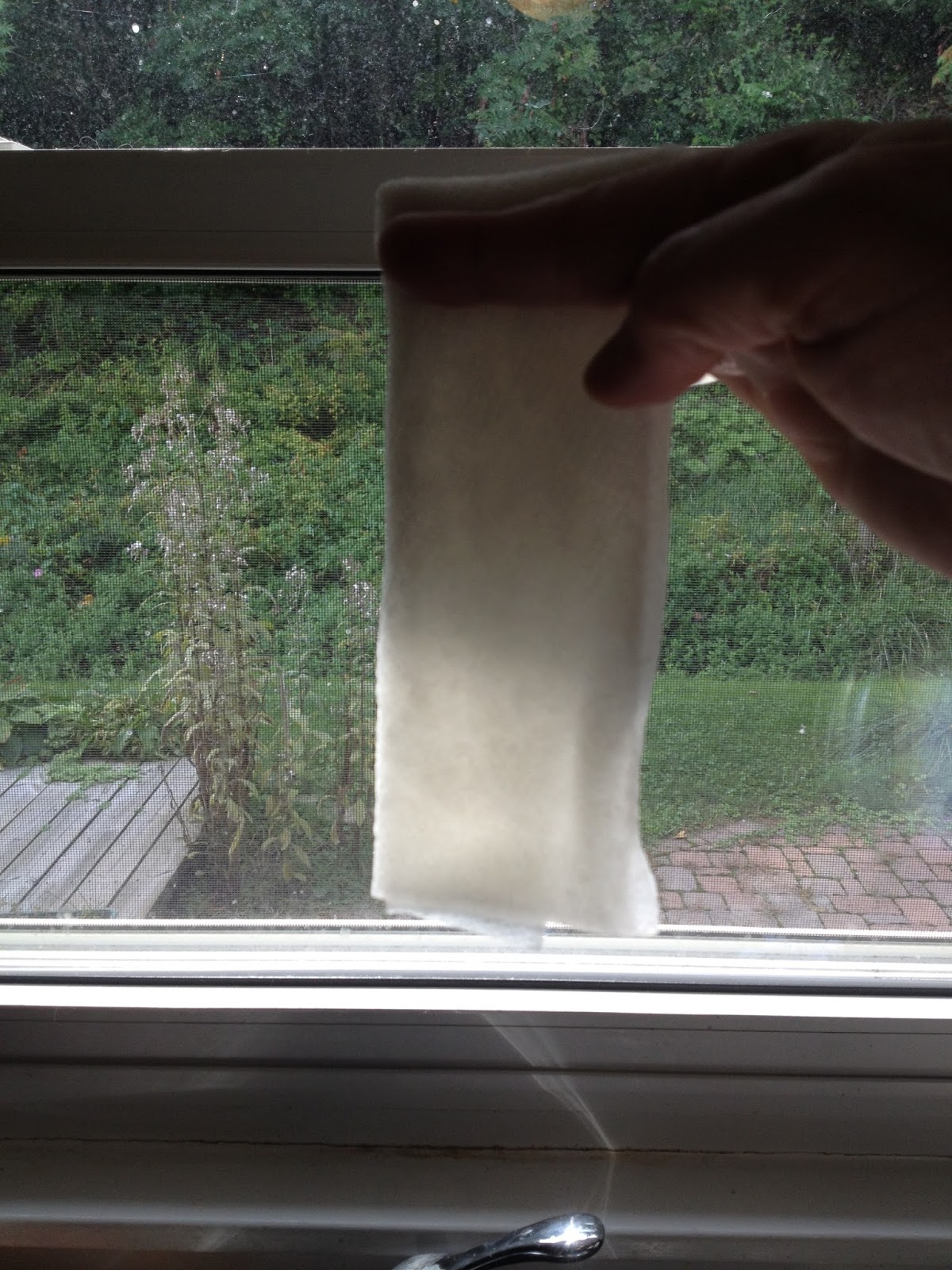
Fold the towels in half, in half again and in half again until you get a strip about two to two and half inches wide. Then run this under cold water. Hold it up with one hand, and place your index and middle finger from the other hand around the towel, and run them down to wring the towel out.

You want the paper towel to be damp but not sopping. If you wring out too much water, it won't stay damp quite as long as you may want; if you don't wring out enough, your acrylic paints may actually melt into the paper towel and dissipate.

Place the damp towel to one side of your palette. I find these paper towels fit pretty perfectly on the short side of my Masterson palette.

Then add your paint!


The Importance of Your Paint Choice

The type of acrylic paint you use is going to in part determine how successful this method is for you. Like I mentioned in previous posts, I prefer to use heavy body acrylic paints from M. Graham or Golden. These have no fillers, a higher pigment load, and they are, to me, more manipulable.

If you use liquid acrylics or a brand that is "puffier" with a lot of fillers, water and additives, this probably will not work for you because the paint will quickly dissipate into the damp paper towel.

Why I  Love This Method - Working on the Palette and Cleaning It Up

What I love about this approach is it makes me feel like I did when I was an oil painter. My paints are wet all day. I get to mix many of my colors directly (except those I mix in the cups) and load my brush directly from my palette (it does stain just the plastic just a tiny bit, but I'm okay with that). I can easily control how much paint and water or medium I add, working in small, progressive swirls across my palette throughout the day.

My palette at the end of the day.
If you use this method, be sure you aren't working in the same area of your palette twice. If you do, you could pull up flakes from not-quite-dry acrylic paint into your new paint mixes.

Sometimes, especially if there is extra space on my palette and my paints are still wet, I do carry this setup over into a second day. But most days, I clean up and start from scratch.

While palette paper is probably simpler for some people, I really do like being able to work directly on my palette, I simply let this dry overnight, then clean it up the next morning.

I toss the paint and damp paper towel, and then use a dry paper towel and my finger nail to scrape up the dry acrylic paint. This might sound tedious, but really, because the paint basically becomes a thin plastic film, it pulls up pretty easily once you get going, and I have a relatively clean palette when I'm done scraping. It takes me just a few minutes to scrape the whole thing.


Scraping the dry paint off the palette with a dry paper towel.


To get any excess flakes, I use a damp paper towel to wipe it off, and I'm ready to start the day again.


What Your Favorite Tip?


I really hope this piece helps make your acrylic painting sessions a little more enjoyable. But remember, everyone's method is a little bit different, so this isn't the only way to do things! What's your favorite tip for working with acrylics? I want this blog to be a place where we can all learn from each other and share what we know, so we can all become better acrylic realist painters. So if you have a tip you'd like to share, or if you'd like to share a post about your process, email me at kimtestoneartist@gmail.com.


Happy Painting!


Saturday, February 18, 2017

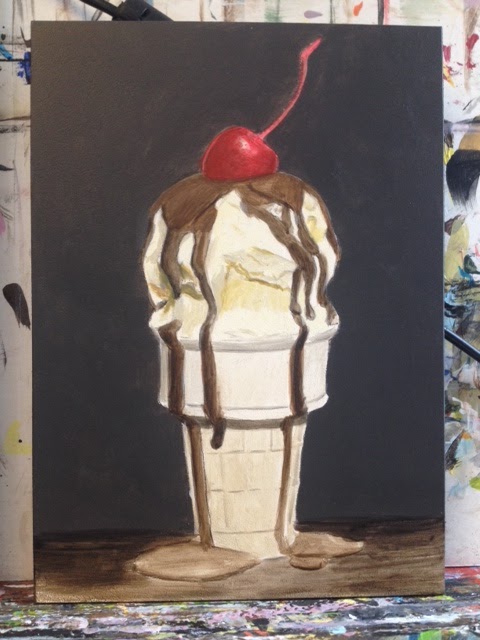
Behind the Scenes Photos of Ice Cream Cone with Chocolate and a Cherry Acrylic Daily Painting

Small realist acrylic painting of vanilla ice cream cone with chocolate and a cherry
"Standing Tall," acrylic on panel, 7" x 5".
I just thought I'd share a few progress photos I took of this daily acrylic painting. The secret to working realistically in acrylic is, as I've shared before, thin layers and a medium mix made of 70% medium (my preference is matte) and 30% water.

You can also see here that I originally included the surface the cone was sitting on, but boldly decided to cut it out in the end! Enjoy!


What's New

My Blog is Moving to MakingHappyArt.com

Hey all, just a quick post today. I've neglected my blog for a long time. Part of that was because the functionality on Blogger is just ...